Sedona wedding planning guide
How to Plan a Sedona Elopement: Permits, Locations & Logistics
Straightforward local advice for planning a Sedona elopement, from permits and legal locations to guest counts, parking, professional coverage, and backup plans.
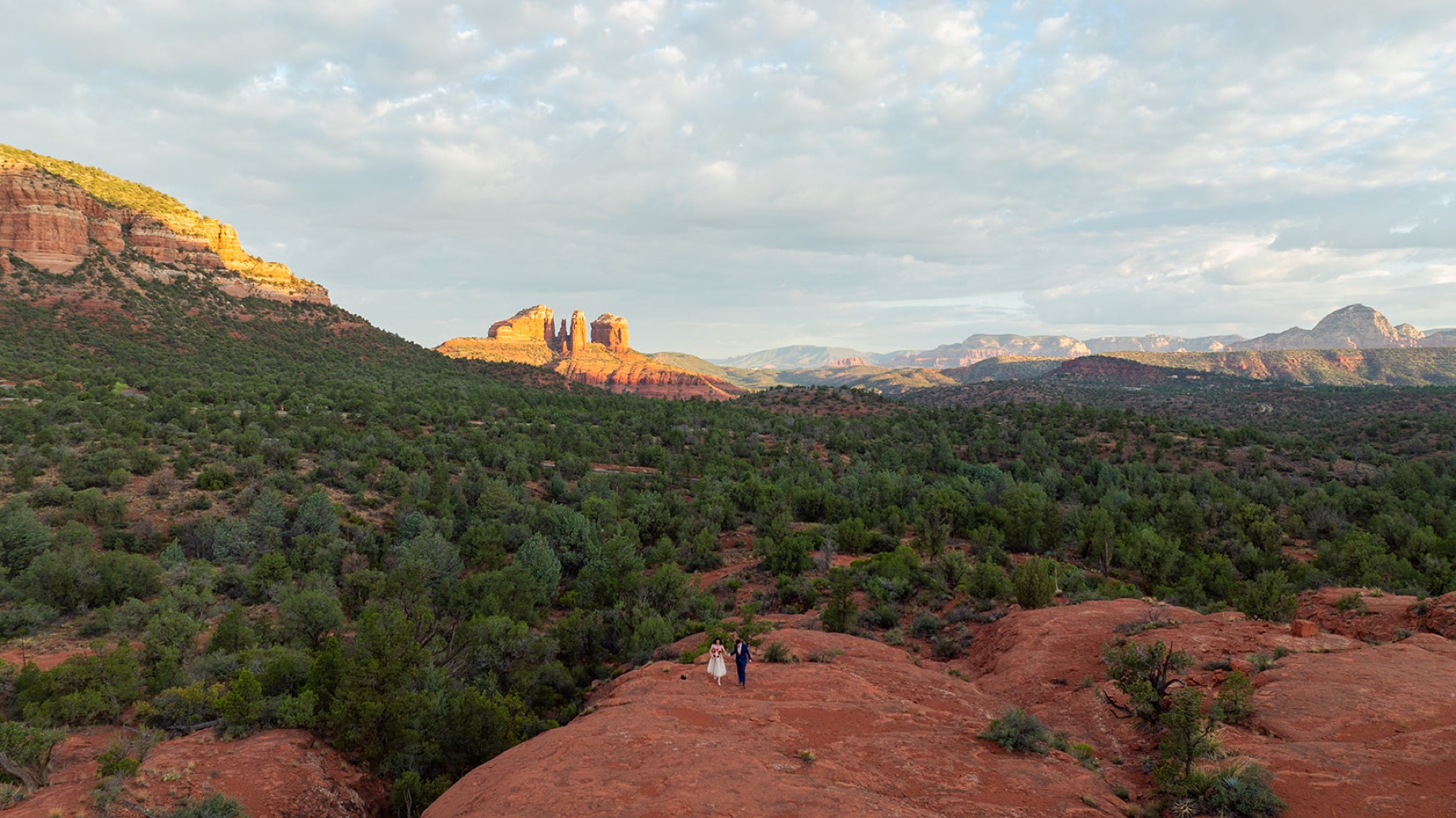
People see a photo of two people exchanging vows on the red rocks and think a Sedona elopement is simple: choose a trail, show up, and get married at sunset.
It absolutely can feel that simple on the wedding day. Getting it there takes some local planning.
I have filmed weddings and elopements in Sedona long enough to know where plans usually get tripped up: a location that is not legal for the full vendor team, a shuttle schedule no one checked, ten people trying to stand where four barely fit, or a sunset timeline with no room for traffic.
My job is to catch those things before they become wedding-day problems. Here is what I want every couple to know before choosing a location.
Last checked September 12, 2026. Sedona access and permit rules do change, so confirm the current rule for your exact location and plan before you commit to it.
Start with five practical questions
Before falling in love with a ceremony spot, figure out:
Who manages the land? National forest, city park, state park, private venue, and vacation rental properties all have different rules.
How many people will actually be there? Count the couple, every guest, and every vendor.
What are you bringing? Chairs, arches, florals, rugs, musicians, and sound equipment can change what is allowed.
How will everyone get there? Parking, shuttle schedules, walking distance, terrain, and sunset timing all matter.
What is Plan B? Heat, wind, snow, monsoon storms, wildfire restrictions, road closures, and heavy crowds can change a plan quickly.
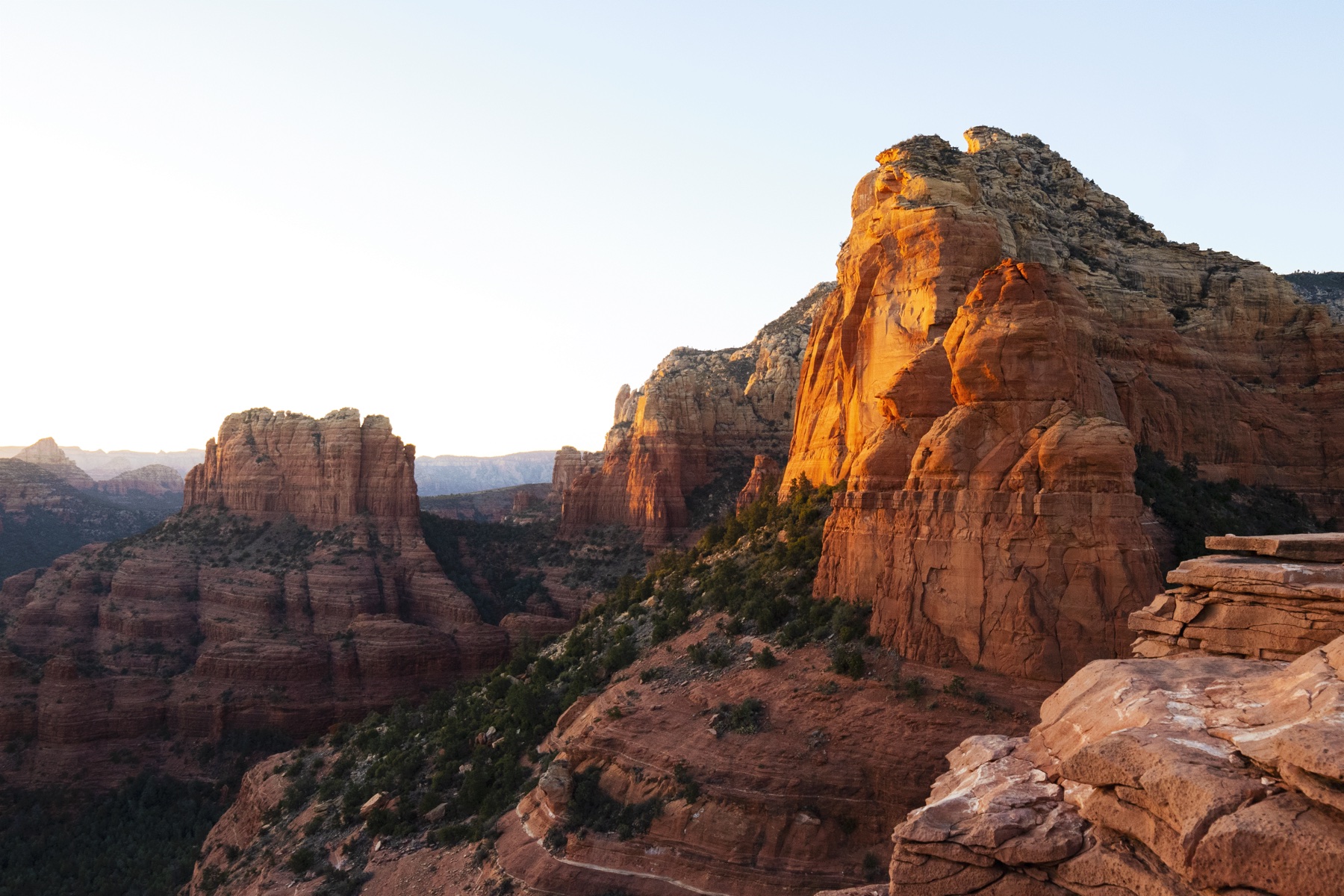
The landscape is already doing the decorating. The best plans protect the view, the experience, and the place itself.
Answer those first and the rest of the day gets much easier.
Do you need a permit to elope in Sedona?
Sometimes. There is no single “Sedona elopement permit” because Sedona is a patchwork of jurisdictions.
Many of the red-rock locations people recognize are on Coconino National Forest land. Others belong to the City of Sedona, Arizona State Parks, a private venue, or another public agency. Start with the exact pin—not simply “Cathedral Rock” or “somewhere near Bell Rock”—and identify who manages it.
The current Coconino National Forest wedding guidance says a wedding permit is not required when fewer than 75 people attend, there is no sound equipment, and the only paid providers are the minister performing the ceremony and/or the photographer or videographer. Other plans, including weddings with additional paid service providers, may require a permit.
A six-person guest list can become a twelve-person footprint once the planner, officiant, florist, musician, photographer, and filmmakers arrive. The land manager cares about everyone onsite and everything you are bringing, not only the names on the invitation.
Also remember that a permit is not a private reservation. You cannot ask hikers to leave, move out of the background, or give up parking. If you choose public land, the wedding needs to work alongside the public.
What to tell the land manager
Give them the complete plan the first time:
Exact location, date, and time.
Total number of people, including vendors.
Every paid provider and what each person will do.
Photo and video crew size.
Chairs, arches, rugs, florals, props, or other setup.
Live or recorded music and any amplification.
Vehicles, parking plan, and expected time onsite.
Drone plans, if any.
If the plan changes, check again. An answer based on “just the two of us” may not apply after family and a full vendor team are added.
A ceremony can be allowed where professional coverage is not
This is the part I see people misunderstand most often.
Permission to stand somewhere and exchange vows does not automatically give a paid photographer or filmmaker permission to work there. Coconino National Forest has separate rules for weddings, still photography, and commercial filming.
For weddings, designated Wilderness areas are off the table for professional photography and filming. The Forest Service allows commercial work in Wilderness only in very narrow circumstances tied to protecting or interpreting Wilderness itself. Wedding coverage does not meet that test. You can read the Coconino National Forest filming guidance, but the practical answer for couples is simple: if a location falls inside designated Wilderness, I take it off the photo-and-film list and help find a legal alternative.
This does not mean Sedona is short on beautiful options. It means we choose a place where the ceremony and the coverage are both allowed.
Drone coverage has its own set of limits. Land rules, airspace, temporary flight restrictions, fire conditions, weather, wildlife, and crowds can all affect whether a flight is legal and responsible. I include drone coverage in applicable collections when it is allowed and safe, but I will never promise a flight before I know the location and conditions.
Choose a location that fits the day—not just the photo
The most famous view is not automatically the best ceremony location. I would rather put you somewhere that feels good than force your wedding into a spot that fights the guest list, timeline, or terrain.
A reservable venue or private event property
This is often the easiest choice if you want privacy, seating, restrooms, a meal, decor, or several vendors. You have a home base, and you are far more likely to have a useful weather plan.
We can still go onto the red rocks for portraits or a private vow exchange. For many micro weddings, that combination feels much more relaxed than trying to make a busy public overlook behave like a venue.
Crescent Moon Picnic Site
Crescent Moon has an iconic Cathedral Rock view and more infrastructure than a trail. Weddings there are by reservation only, and you still need to confirm current policies, fees, capacity, operating hours, and public use before sending invitations.
A public forest trail or overlook
Public-land locations work best when the group is truly small and the setup is minimal. They also give you the least control.
There may be hikers behind you. Parking may be full. The walk may feel longer in formal clothing. There may be no restroom or drinking water. A weekday sunrise and a Saturday sunset can feel like two completely different places.
Choose public land because you are comfortable sharing it, not because you expect to claim it for an hour.
A City of Sedona park or facility
The city has facilities and rentals that can work well for an accessible ceremony or a gathering that needs predictable amenities. Each space has its own reservation process, so confirm whether you also need an event, sound, or filming permit. The city’s permit page is the place to start.
A short-term rental
An Airbnb or vacation rental is not automatically an event venue.
Inside the City of Sedona, short-term rentals cannot be used for special events of any size, including weddings and receptions. Review the City of Sedona short-term rental FAQ and ask the host for the property’s jurisdiction and rules in writing.
Use a rental for lodging unless it is legally operated and contracted as an event venue. A beautiful backyard in a listing is not permission to hold a wedding there.
How many guests can you bring?
The legal permit threshold and the number of people a location can comfortably hold are not the same thing.
Fewer than 75 people does not mean every overlook is appropriate for 74. Some Sedona locations feel crowded with ten. Others have only a narrow standing area, single-file access, or a handful of parking spaces.
Count everyone who will be onsite, then ask:
Can every guest handle the terrain safely?
Is there room for other visitors to pass?
Will anyone need seating or a restroom?
Is the parking plan realistic?
Can the entire group leave without a trace?
For a larger micro wedding, a venue or reservable site is usually the kinder choice. For a public trail or overlook, smaller really is better.
Parking can make or break the plan
Trailhead access changes throughout the week and year. The Sedona Shuttle serves several popular locations, and some trailhead parking closes while the shuttle is running.
Build transportation around the actual date:
Check the current routes and operating calendar.
Pick one meeting place instead of asking guests to improvise carpools.
Add time for traffic, loading, walking, and missed turns.
Keep rings, vows, flowers, and other essentials with the couple or coordinator.
Check whether each vehicle needs a Red Rock Pass, America the Beautiful Pass, or site fee.
If the ceremony is close to sunset, a parking problem can cost the best light. I build timelines backward from sunset and the real access plan—not only from the time printed on the invitation.
“Short trail” does not always mean easy
Red rock can be uneven, sandy, slick after rain, exposed to sun, and awkward in formal shoes. Cell service may be unreliable. A location that looks flat in a wide-angle photo may have a steep drop just outside the frame.
Tell your local team about mobility concerns before choosing the site. We can often find a beautiful view with a gentler approach, or hold the ceremony somewhere accessible and save the more adventurous location for the two of you.
Guests who do not hike can still have a great Sedona weekend. I put together this local guide to things to do in Sedona without hiking specifically so couples have something useful to share with family.
Make a backup plan you would still love
Summer brings heat and monsoon storms. Winter can bring snow and ice. Wind affects audio, comfort, and decor. Wildfire restrictions, road conditions, or an agency closure can take a location off the table.
A real backup plan answers three questions:
Where will the ceremony move?
Who tells the guests and vendors, and when?
Is the alternate location already legal and workable for the group?
“We will decide at the trailhead” is not a backup plan. Choose a second location ahead of time. If the weather is dramatic but safe, we can often adjust and make something incredible. If it is unsafe, we move. The story is still yours even when the location changes.
For more seasonal detail, read my guide to the best time to get married in Sedona.
Leave the red rocks the way you found them
Keep public-land ceremonies simple.
Coconino National Forest prohibits nonnative seed such as rice and birdseed, along with dove, pigeon, and butterfly releases. Chairs may be allowed, while arches and arbors are considered case by case. Archaeological sites are not wedding backdrops, and sensitive locations should never become event props.
Skip confetti, loose petals, glitter, open flame, and anything that can blow away. Do not carve, move rocks, enter closed areas, or post directions to a sensitive site. Pack out everything, including floral wire, ribbon, food, and tiny decorative pieces.
Sedona does not need much added to it.
A simple planning timeline
Before choosing a date
Decide whether you want a venue, a reservable public site, or a very small public-land experience.
Estimate the full onsite headcount, including vendors.
Talk honestly about mobility and how much hiking you want.
Read the best time to get married in Sedona.
Before booking lodging or sending invitations
Identify the exact land manager and confirm the ceremony rules.
Confirm photography, filming, drone, sound, and setup rules separately.
Make sure a rental is being used for lodging only unless it is a legal event venue.
Choose the backup location and transportation plan.
One month before
Recheck permits, reservations, passes, trail access, and shuttle schedules.
Finalize the timeline around light, traffic, and the slowest guest—not the fastest hiker.
Give every vendor the same access plan.
Tell guests what shoes, water, layers, and terrain to expect.
During wedding week
Watch official alerts, fire restrictions, weather, and road conditions.
Confirm the primary and backup plans with the full team.
Keep the day small, flexible, and respectful of the place.
Frequently asked questions
Can we elope at Cathedral Rock?
Possibly, but “Cathedral Rock” can mean several different areas. The exact pin matters. We need to check the land manager, current restrictions, shuttle access, total group size, and whether professional coverage is allowed there. A popular trailhead is never a private ceremony space.
Can our family come?
Yes. An elopement can include the people closest to you. Choose a site that safely fits everyone and remember to count the vendors too. If the group needs chairs, restrooms, easy parking, or a meal afterward, a venue may create a much better experience.
Can we bring an arch, chairs, or music?
It depends on the site. On Coconino National Forest land, chairs may be allowed, small structures are reviewed case by case, and sound equipment changes the permit question. Describe every item before bringing it.
Can we get married at our Airbnb?
Not automatically. The City of Sedona prohibits weddings and receptions at short-term rentals. Rules may differ outside city limits, but you still need written confirmation of the jurisdiction, legal use, occupancy, parking, and vendor access.
When should we start the permit process?
Before the location, timeline, and invitations become hard to change. The agency may need details about the group, vendors, vehicles, equipment, and activities. Give yourself room to adjust the plan.
Let the planning disappear on the wedding day
The point of doing this work early is not to make your elopement feel managed. It is to let you arrive, breathe, and be present because the legal and logistical questions have already been handled.
I know these places, the light, and the practical realities of filming here. If you are torn between locations or unsure whether a plan works, tell me what you are imagining. We will shape the coverage and timeline around the experience you actually want.