Sedona wedding planning guide
Sedona Micro Wedding vs. Elopement: How to Choose
The honest difference between a Sedona elopement and micro wedding—and how guest count, location, dinner, logistics, and film coverage change the experience.
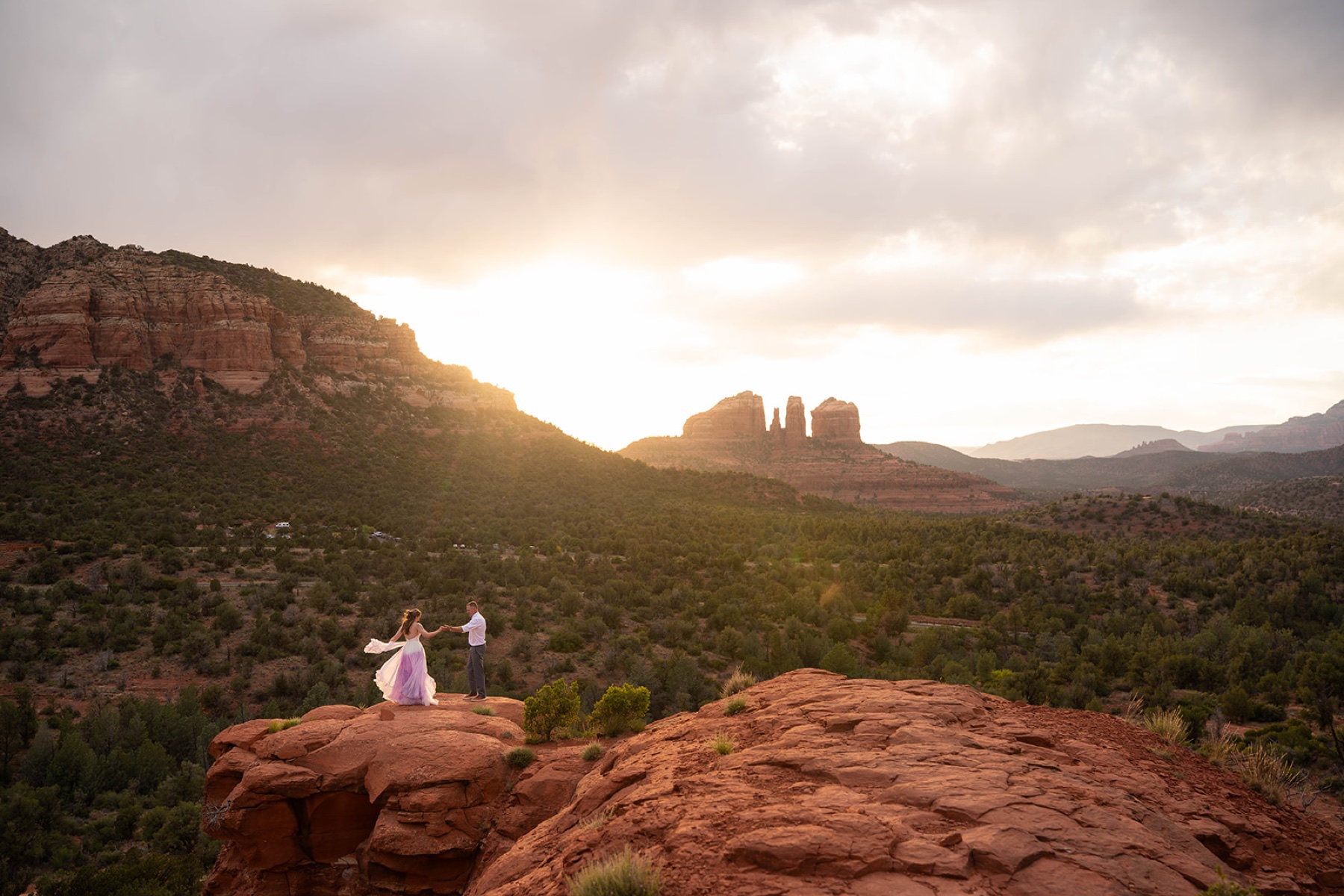
A Sedona elopement and a Sedona micro wedding can both be intimate, intentional, and completely personal. The useful difference is not a strict guest-count rule. It is the amount of hosting, infrastructure, and shared celebration you want around the ceremony.
If the day is primarily about the two of you and the landscape, you are probably planning an elopement. If you are inviting a small group and want to care for them through a ceremony, meal, and celebration, you are probably planning a micro wedding.
Neither is more meaningful. They simply ask for different plans.
What a Sedona elopement usually feels like
An elopement is centered on the couple. Guests may be absent, or you may bring a few people who are deeply part of the story.
The day might include getting ready together, private vows, a scenic ceremony, a hike or drive, portraits, a picnic, dinner, stargazing, or a quiet celebration back at your lodging.
Elopements work beautifully for couples who want:
A flexible day with very few formal expectations
A ceremony and portraits shaped around the landscape
Little or no decor
Time alone together
Freedom to choose a weekday or quieter season
A story that feels more like an experience than an event
The simplicity is real, but it does not mean there is no planning. We still need a legal location, weather backup, transportation, timeline, officiant and license plan, and clear rules for professional photography and filming.
What a micro wedding usually feels like
A micro wedding is a hosted wedding with a smaller guest list. It often includes many traditional elements—an aisle, family portraits, flowers, dinner, toasts, cake, or a first dance—but with fewer people and more room to personalize the pace.
Micro weddings are a strong fit for couples who want:
Their closest people present throughout the day
A private ceremony space or reserved venue
A thoughtful meal and time to connect with every guest
Some traditional wedding moments without a very large production
A comfortable plan for older guests or children
More control over weather, restrooms, seating, and access
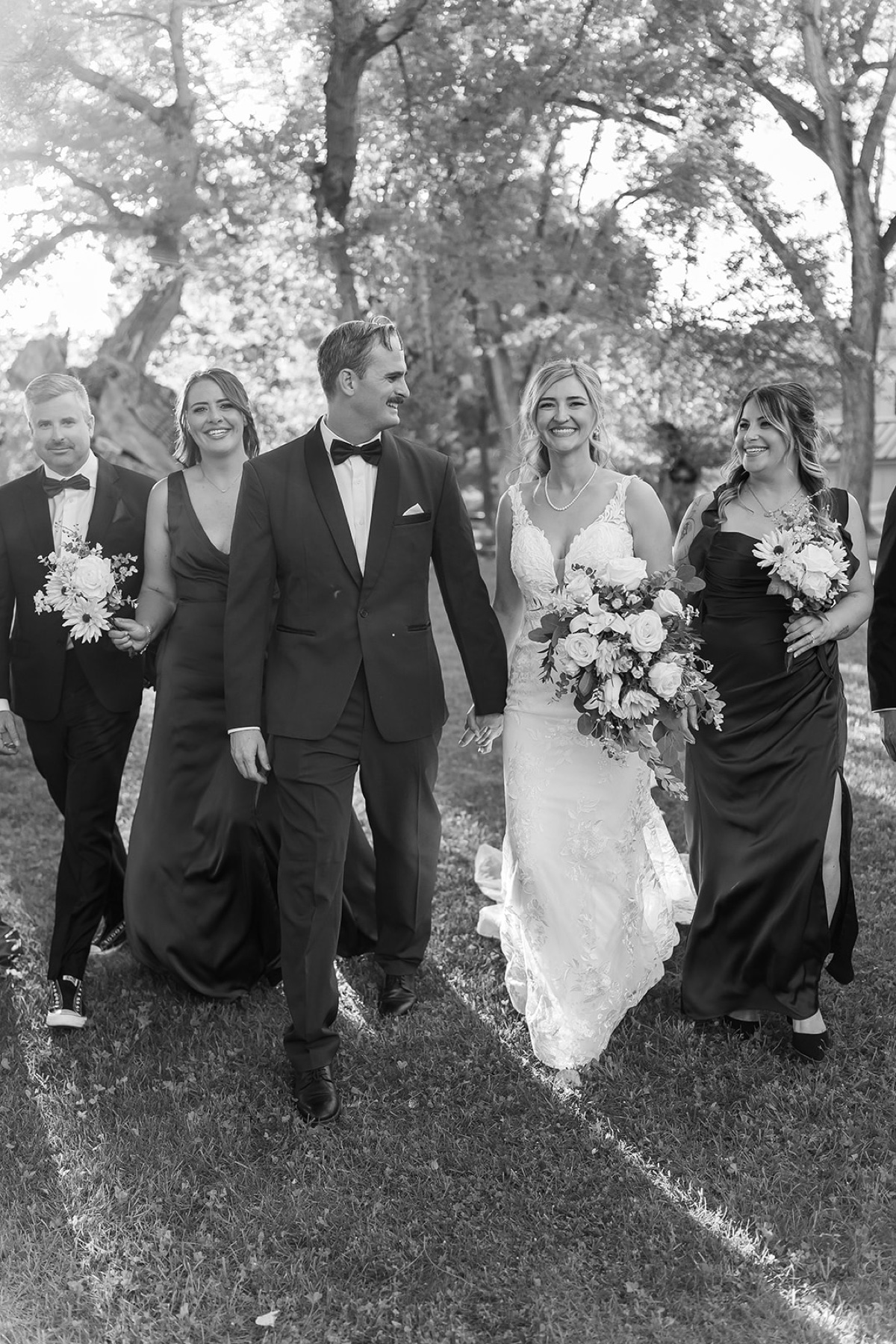
A small guest list can still hold a full wedding-day story: anticipation, ceremony, family, friendship, portraits, and celebration.
The word “micro” does not make the logistics disappear. Once you host guests, you are thinking about arrivals, chairs, food, bathrooms, parking, shade, temperature, and where everyone goes next.
The guest-list question is really a responsibility question
Every invited person changes the plan a little. A group of six active adults can access places that a group of twenty with grandparents and young children cannot.
Ask yourselves:
Do we want to spend most of the day together, or host a group?
Would we feel relieved or disappointed if it were only us?
Are our guests comfortable with uneven terrain, heat, cold, and limited restrooms?
Do we want a meal, speeches, or dancing?
Are there family expectations we genuinely want to keep?
Invite people because their presence changes the day for the better—not because you are afraid of explaining a smaller choice.
Location options change as the group grows
Public-land locations are shared with hikers and visitors. Some have almost no room, limited parking, or access that changes with the shuttle schedule. The number of people a place can safely and graciously hold may be far lower than a permit threshold.
Professional wedding photography and filming are not allowed in designated Wilderness areas. Other locations may have group-size or activity rules. My detailed Sedona elopement planning guide explains how I evaluate land manager, permits, professional coverage, parking, and setup.
For a micro wedding, I often prefer a private venue or reservable site for the ceremony and meal. We can still make the red rocks part of the film through a nearby portrait plan.
The meal often reveals what you are planning
If your vision ends with the two of you sharing a beautiful dinner, you may be planning an elopement.
If you are choosing a table, menu, seating plan, speeches, music, and transportation for guests, you are hosting a micro wedding.
That is not a bad thing. Hosting can be deeply personal. It simply needs a venue and timeline that let you enjoy it instead of managing it.
For a small group, consider:
A private dining room
A chef-led dinner at a legal event property
A restaurant buyout
A venue ceremony followed by dinner onsite
A relaxed brunch or next-day gathering instead of a long reception
Do not assume a short-term rental can be used as an event venue. The City of Sedona prohibits weddings and receptions at short-term rentals, and other jurisdictions and properties have their own rules.
Coverage should match the shape of the day
Five hours can tell a complete story when the day includes preparation, a first look, an intimate ceremony, portraits, and the beginning of dinner or a small celebration.
For a traditional reception—with entrances, dances, speeches, dinner, open dancing, and the relationships that unfold throughout it—eight hours gives the story room to develop.
That is why I keep shorter coverage for micro weddings and ceremony-centered celebrations. I do not want a traditional wedding couple to discover halfway through dinner that all the meaningful reception moments fall outside the film.
My Sedona wedding timeline guide shows how those hours can fit together.
Budget for experience, not only headcount
A smaller wedding can cost less, but it does not automatically mean “cheap.” Many of the most meaningful investments—venue, photography, film, florals, attire, planning, beauty, travel, music, and a beautiful meal—do not shrink in direct proportion to the guest list.
The advantage is choice. You may spend less overall, or you may redirect the budget toward a deeper experience: better lodging, a private dinner, more time together, custom vows, live music, or a film that holds the full story.
A simple way to decide
Choose an elopement if your priorities are privacy, flexibility, landscape, and time together.
Choose a micro wedding if your priorities are intimacy, hosting your closest people, a comfortable ceremony setting, and a shared meal or celebration.
Choose a small traditional wedding if you want the full reception arc and the energy that comes from celebrating into the evening, simply with a more selective guest list.
The label matters far less than building the day honestly.
Frequently asked questions
How many guests make a wedding “micro”?
There is no official number. Many people use the term for weddings under fifty guests, but the experience and logistics matter more than the label. A public overlook can feel crowded with ten, while a private venue can comfortably host more.
Can we have family at our elopement?
Absolutely. An elopement can include the people closest to you. Choose a legal location that safely fits the full group—including vendors—and be honest about mobility, weather, seating, and restrooms.
Can we have a reception after an elopement?
Yes. Some couples have dinner or a small celebration the same evening; others host a larger party at home later. If you are planning a full traditional reception in Sedona, I would treat the day as a wedding when choosing coverage and logistics.
Which option is easier for destination guests?
A private micro-wedding venue is often easier because guests have one clear address, seating, restrooms, and a defined schedule. A very small elopement can be easy too, as long as the location and transportation match the people attending.
Let the day be the size that feels true
You do not have to make a tiny wedding feel bigger, and you do not have to call a fully hosted celebration an elopement to make it intimate.
If you are somewhere between the two, tell me who is coming and what you want the day to feel like. I will help you see which structure—and which film coverage—fits the story you are actually creating.